
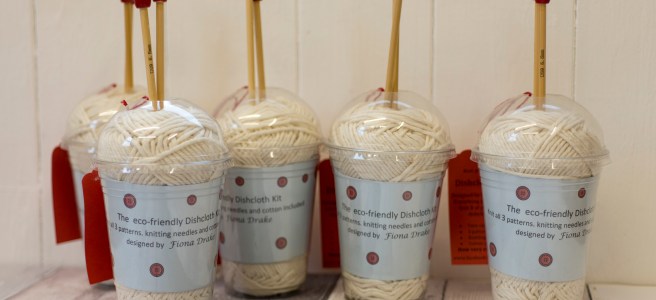
Knitting dishcloths is a great way to try out new stitch patterns plus you have something useful at the end; also I find dishcloth knitting is a lovely quick knit project for when you just want to keep your hands busy. Here you’ll find all my swatching and free patterns for you to have a go. x
Log Cabin Dishcloth
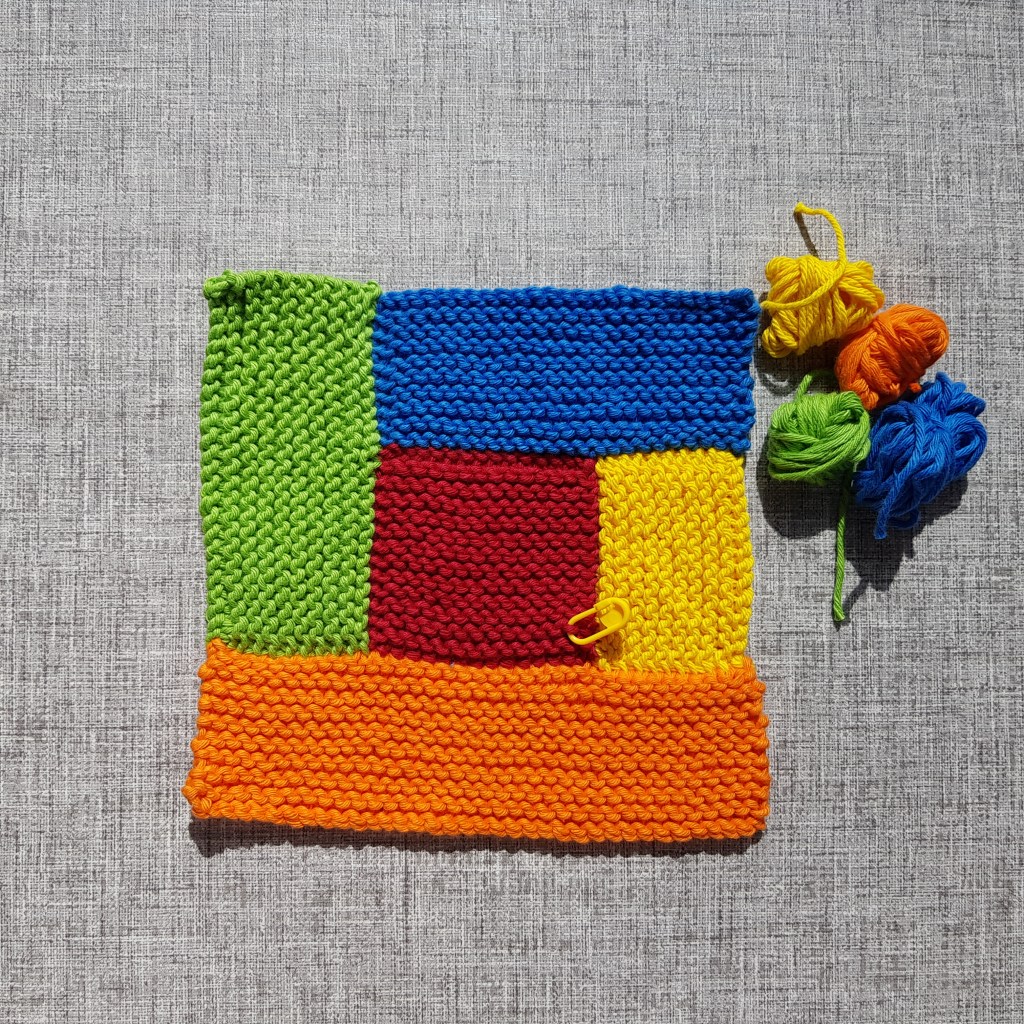
While stash diving I discovered some bright little balls of cotton DK, not enough in each to knit a dishcloth so I was wondering what to do with them....

I have been watching Kate at thelasthomelyhouse.co.uk On her YouTube channel she was showing all her Mum's lovely patchwork quilts and I got inspired with the log cabin design. So here is my simple version.

I like to use needles which are slightly smaller than the ball band gauge suggests, it makes for a much more firm cloth.
CENTRE Cast on 15sts and place a marker here at the beginning of your knitting to mark the front side. Knit 25 rows and cast off on the wrong side.

TIP: All stitches are cast onto the previous block from the front.

YELLOW  Cast 14 stitches on to the side of the red square, starting at the cast on edge (where the pin is) and then through the side bumps and including the cast off edge. Knit 18 rows then cast off on the wrong side.

TIP: you can use a crochet hook to pick up the stitches then slide them off the hook onto your knitting needle.

BLUE Cast on 10 stitches into the yellow block and 15 stitches into the red block, 25 stitches in total. Knit 18 rows then cast off on the wrong side.

GREEN Cast on 10 stitches into the blue block and 14 into the red block, 24sts in total. Knit 18 rows and cast off on the wrong side.

ORANGE Cast on 10 stitches into the green block, 14 stitches into the red block and 10 stitches into the yellow block, 34sts in total. Knit 18 rows and cast off.

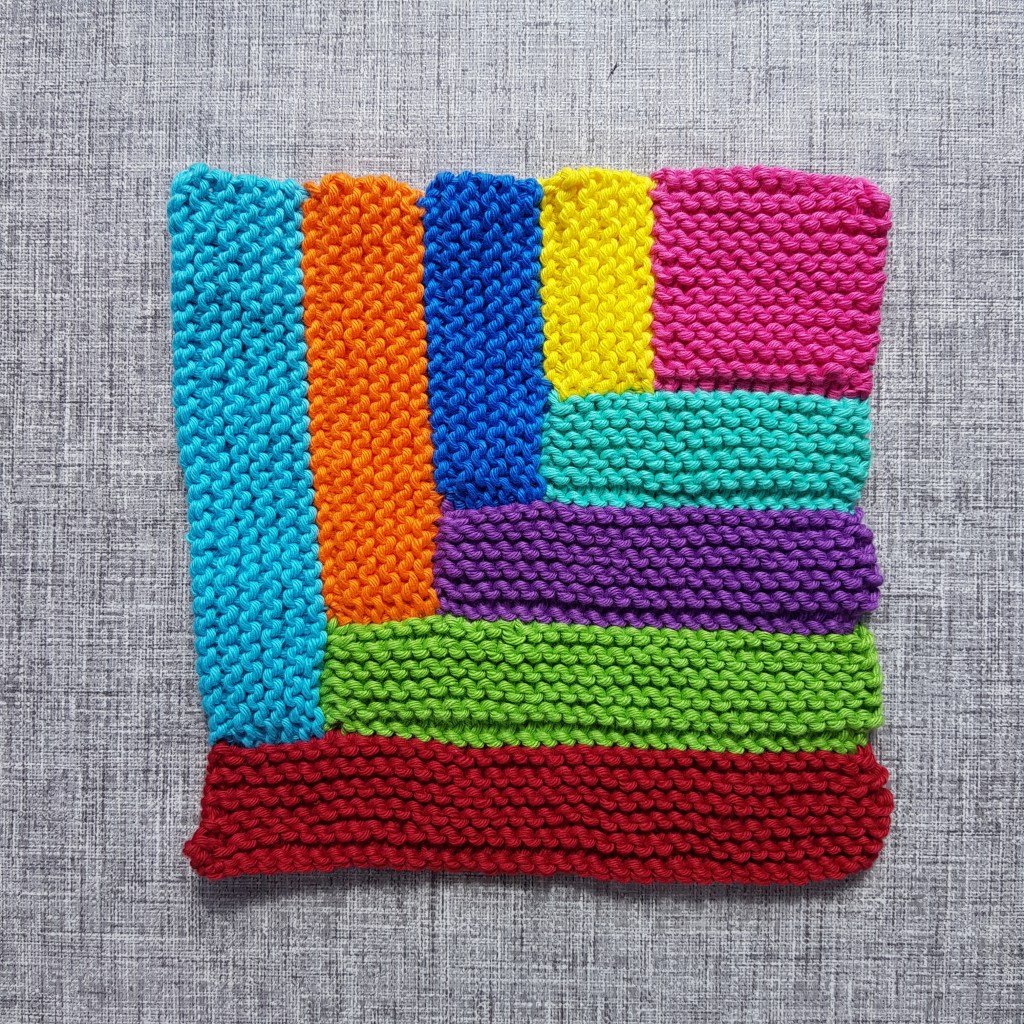
There are ends to sew in but it only takes a minute. I still had some small bits of cotton left so I experimented, maybe you could give it a try?
Basic Swing Knitting
Basic swing knitting is done on double pointed needles or circular needles, working with two or more balls of yarn which could be different colours or even different gauges and types.
This is how we do it: One row is worked, then without turning your item you work the next colour, (the same side is worked twice) then turn your work and repeat the process. This is why we use double pointed needles.
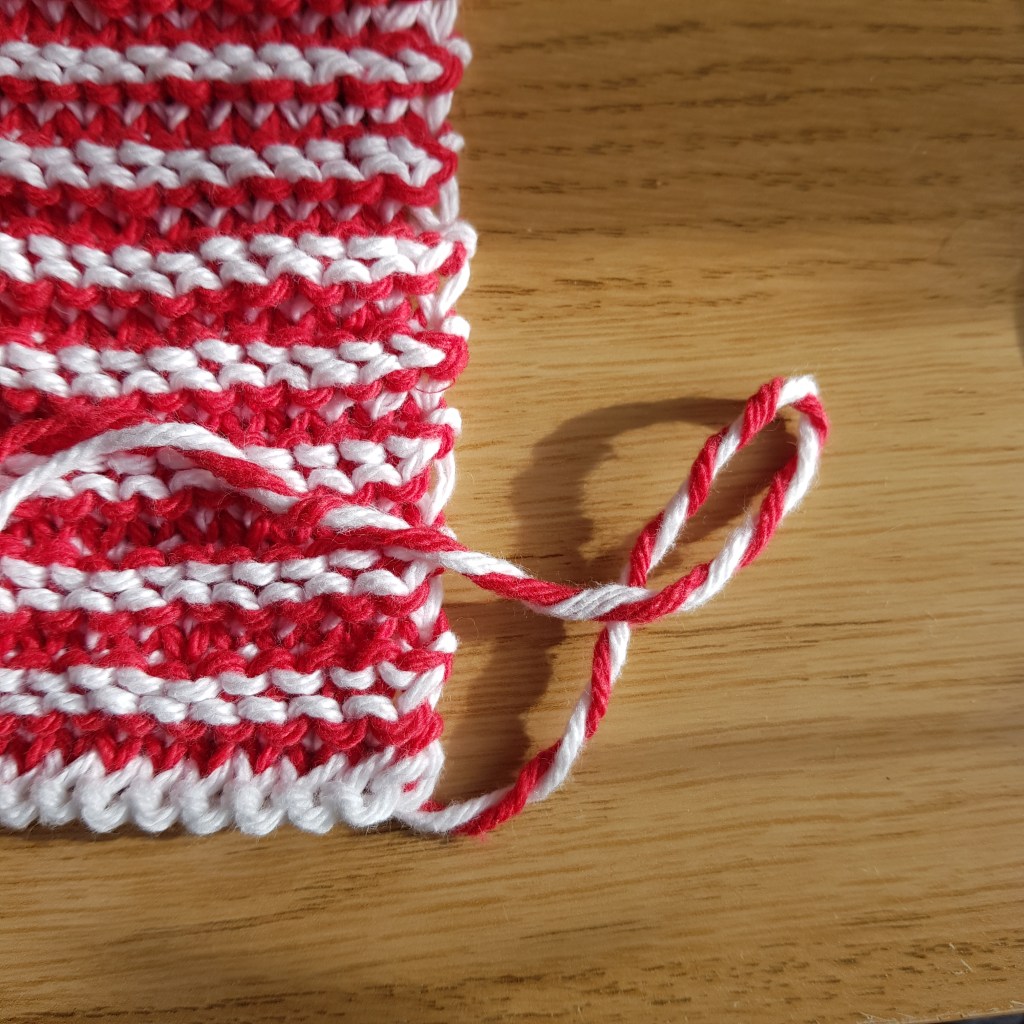
This technique becomes even more interesting when short rows are used to create pools of colour within your work. One of the most beautiful examples of this is the Dream Bird Shawl by Nadita Swings on Ravelry https://www.ravelry.com/patterns/sources/naditas-ravelry-downloads
As always I use swatching to learn and practice a technique, dishcloths are perfect for this. So here goes:
TIP:
You may find it helpful to put a pin or marker on the front of your work at the side where you start.
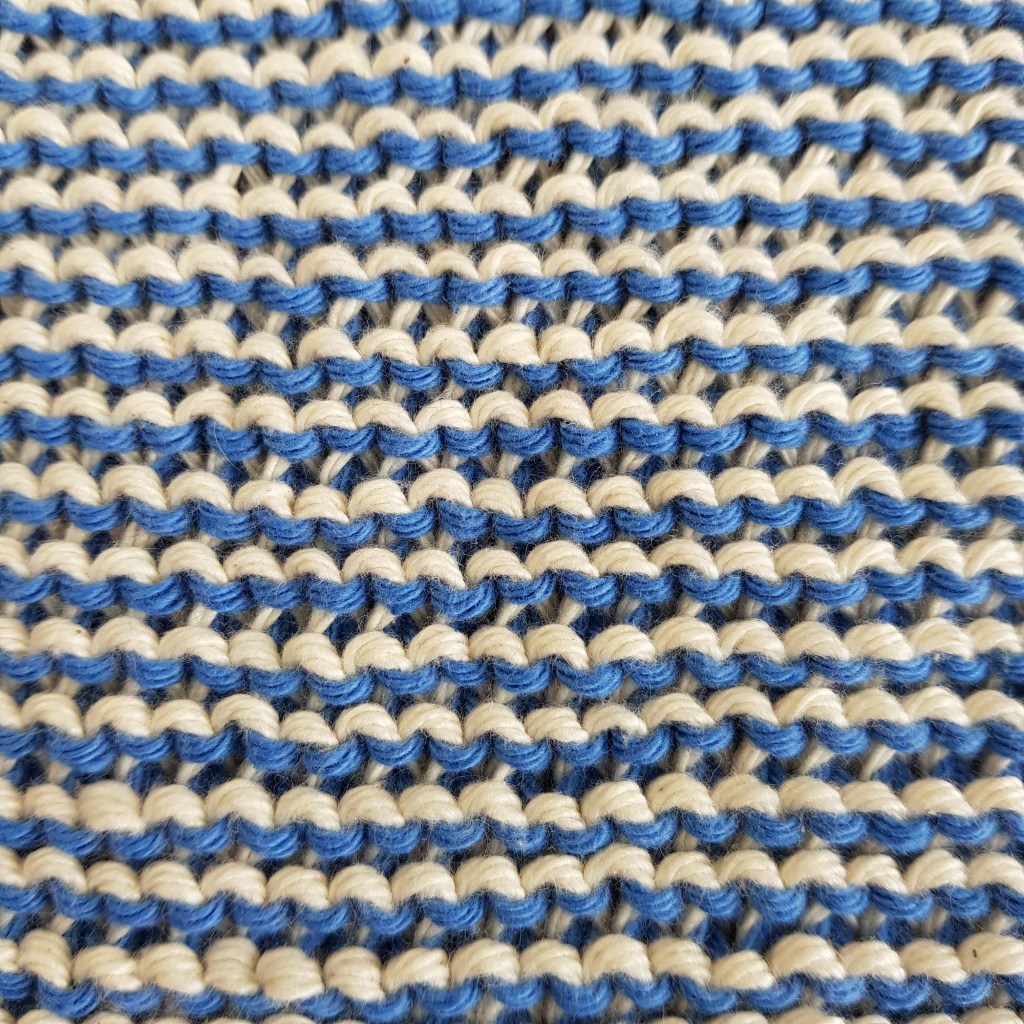
Garter Swing
A = White
B = Blue

Cast on 34 stitches with B
- with A. Knit row (don’t turn)
- With B. Purl row (turn)
- With A. Purl row (don’t turn)
- With B. Knit row (turn)
Repeat these 4 rows and cast off when you have your desired size.
Swing Knit every row
A = White
B = Red
Cast on 34 stitches
- With A. Knit row (don’t turn)
- With B. Knit row (turn work)
- With A. Knit row (don’t turn)
- With B. Knit row ( turn work)
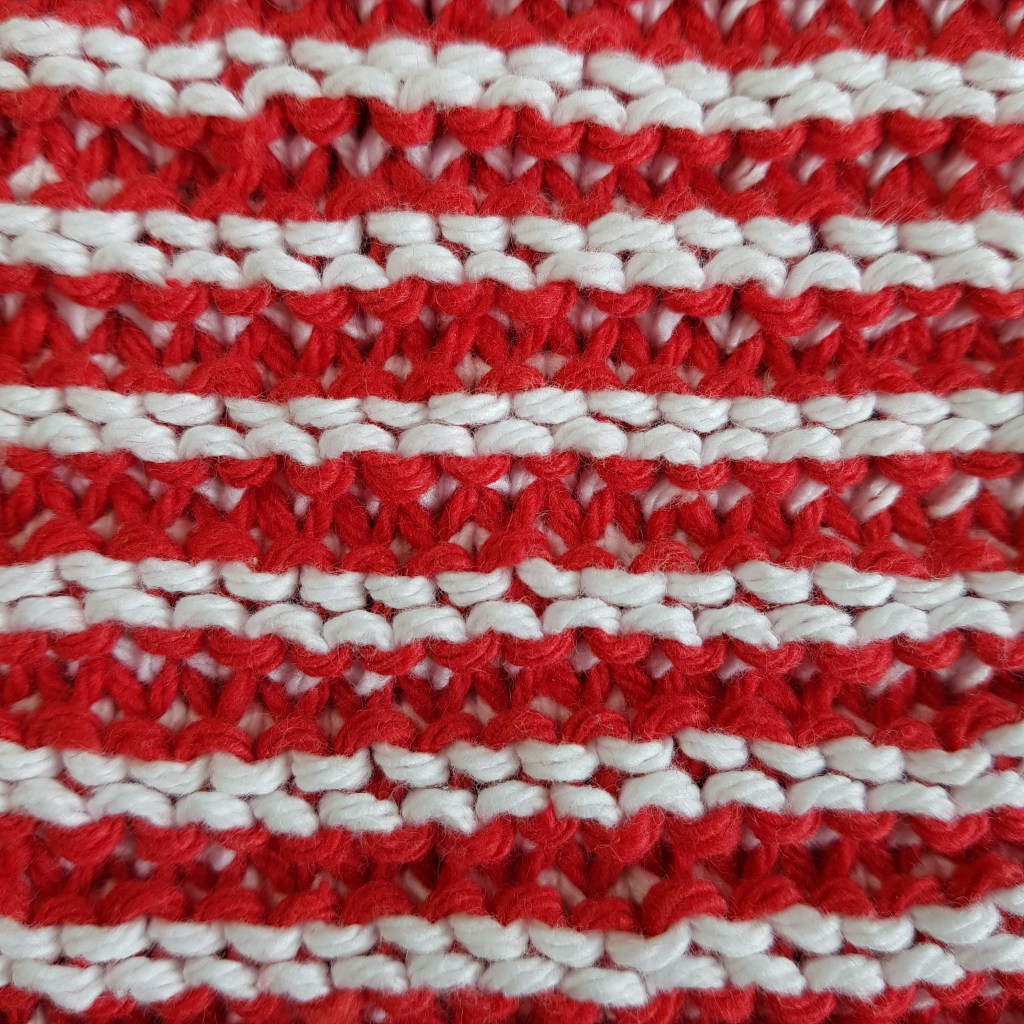
Repeat these 4 rows and cast off when you have your desired size.
Stocking Stitch
A = White
B = Green
Cast on 34 stitches in white
TIP: Stocking stitch curls at the sides so you may want to knit the first 3 stitches on every row.
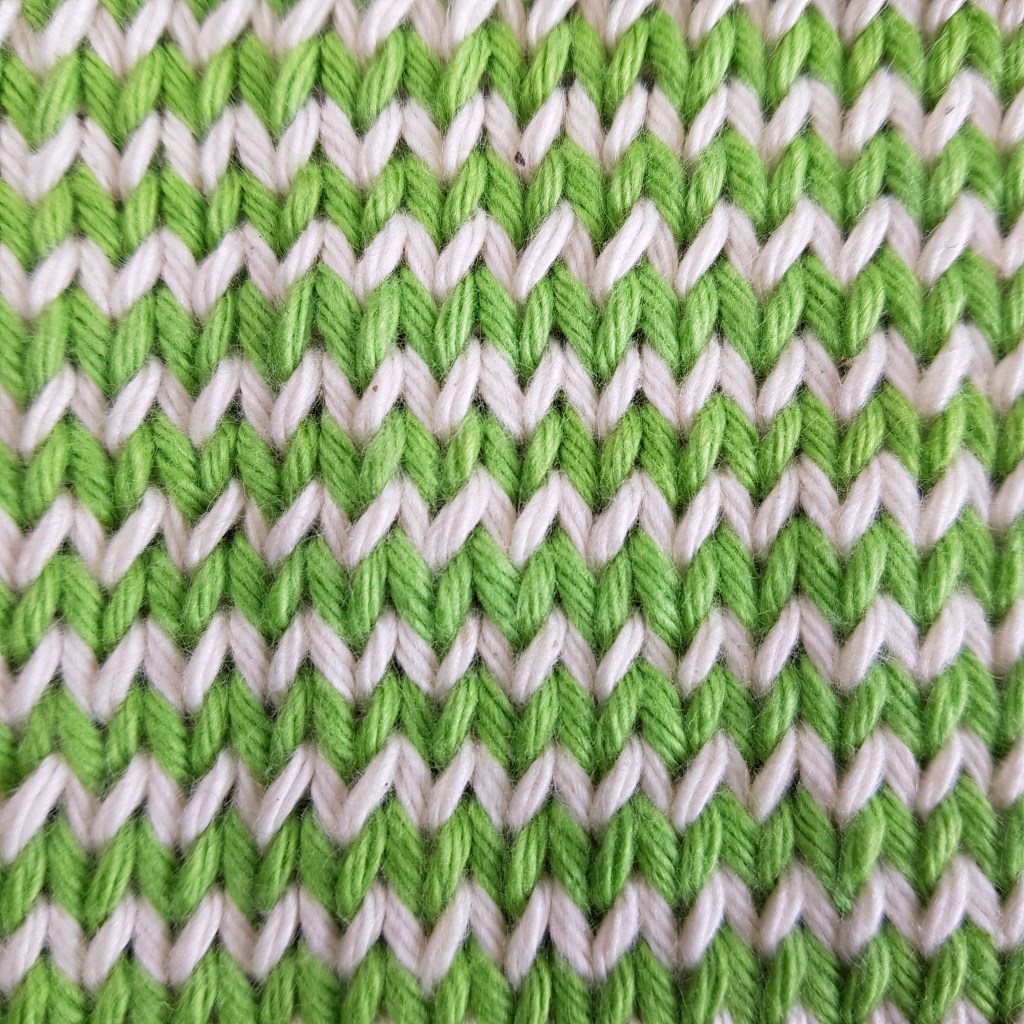
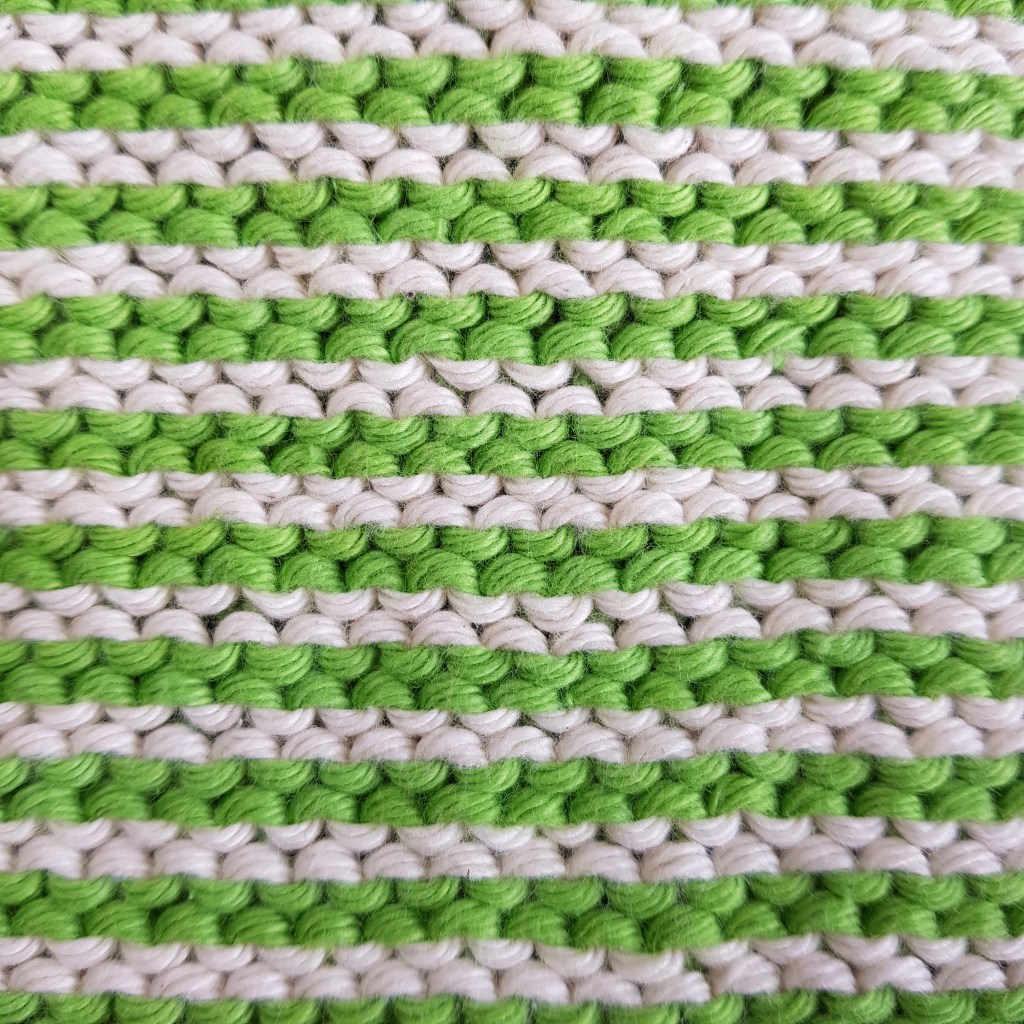
- With B. Knit row. ( do not turn)
- With A. Knit row (turn work)
- With B. Purl row (do not turn)
- With A. Purl row (turn work)
Repeat these 4 rows and cast off when you have your desired size.

If you are interested in learning more about swing knitting. Heidrun Leigmann has lots of information and patterns to try.
Alternating Lace
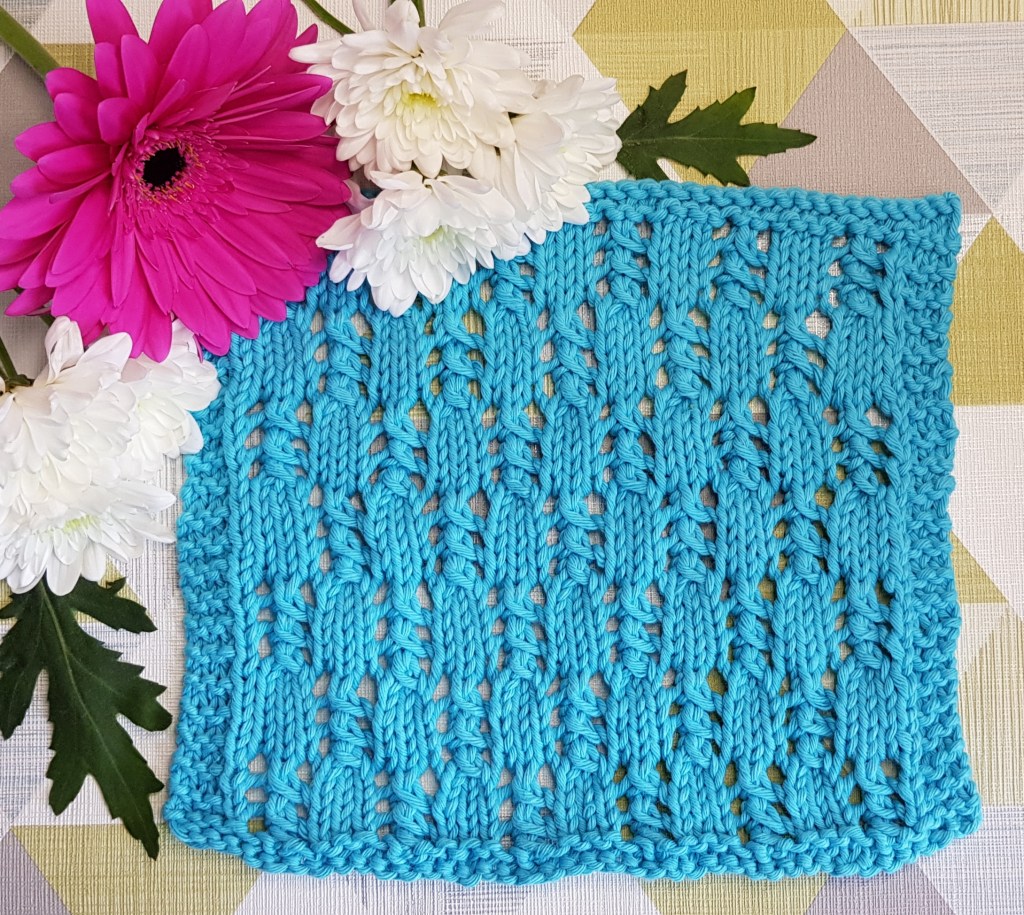
An easy to do lace knit that creates an interesting visual pattern. As usual I knit on smaller needles to make a firm fabric; dishcloths work really well when the fabric is close knit.

 Combination of 6 stitches + 5

E = edge stitches
Yo = yarn over
Psso = pass the slipped stitch over the next stitches
K2tog = knit 2 stitches together
Slip 1 = slip the next stitch onto right hand needle
Cast on 41 stitches and knit 2 rows
- K3e, K1, * yo, slip 1, K2tog, psso, yo, K3 *, To end the row, yo, slip 1, K2tog, psso, yo, K1, K3e
- K3e, * purl row *, K3e
Repeat these 2 rows 3 times in total
- K3e, K4, * yo, slip 1, K2tog, psso, yo, K3 *, K1, K3e
- K3e, * purl row *, K3e
Repeat these 2 rows 3 times in total
To finish knit to the desired length and end on a first row, then knit 2 rows and cast off.
happy knitting x
Dishcloth Pancakes (not really though !)
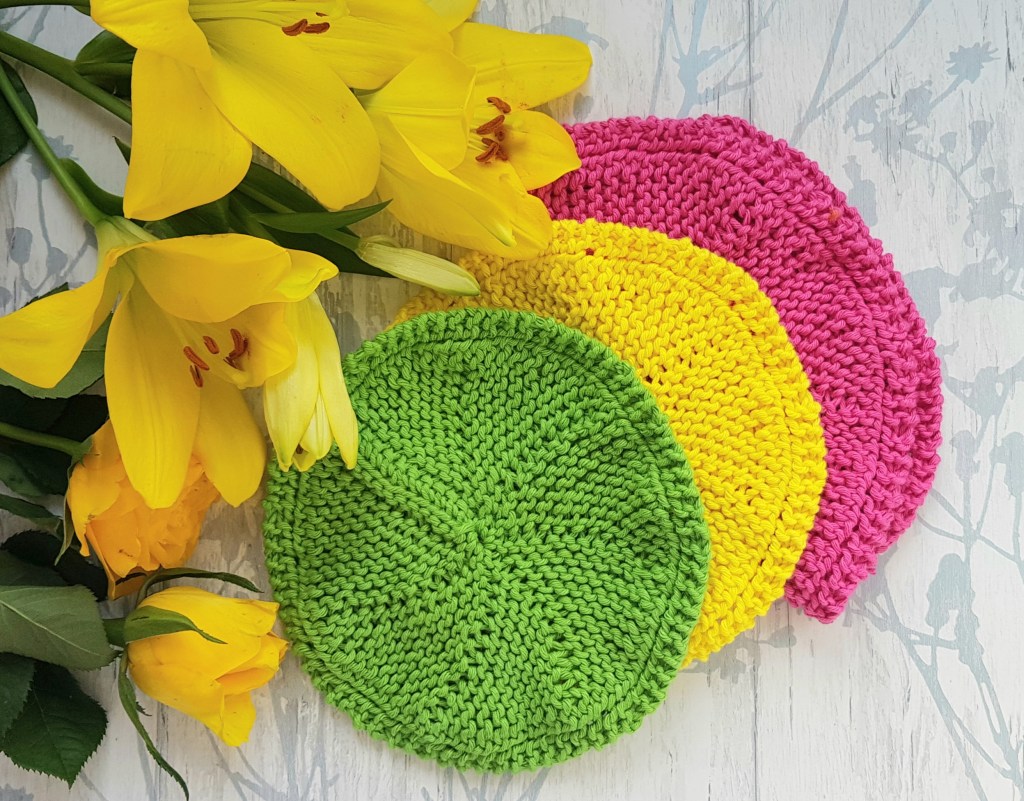
These are circular dishcloths knitted on straight needles. Knitting short rows forms wedges which are sewn together to close the circle.
This is a great way to practise this technique and there are many different ways to knit short rows, check them out on YouTube.

Here is the most simple method........

Cast on 16 stitches.
(TIP: Place a secure marker at the beginning of the row so you don't forget where the start is.)
- Slip 1 stitch knit wise, knit to 4 stitches before the end of the row, k2tog, yo, k2. Turn your work. ….You will repeat this process for every odd row.
- Knit row to last 2 stitches, leave them on the needle and turn your work.
- As row 1 (slipping the first stitch etc.)
- Knit 13 stitches, turn your work leaving the remaining stitches untouched each time.
- As row 1
- Knit 12 stitches. Turn your work.
- As row 1
- Knit 11 stitches. Turn your work.
- As row 1
- Knit 10 stitches. Turn your work…Are you beginning to see how this is working?
- As row 1
- Knit 9 stitches. Turn your work.
- As row 1
- Knit 8 stitches, turn your work.
- As row 1
- Knit 7 stitches, turn your work.
- As row 1
- Knit 6 stitches, turn your work….. Nearly at the end of the wedge
- As row 1
- Slip 1 knit wise, K2tog, yo, K2, turn your work.
- Knit all the way back to the beginning. One wedge completed.
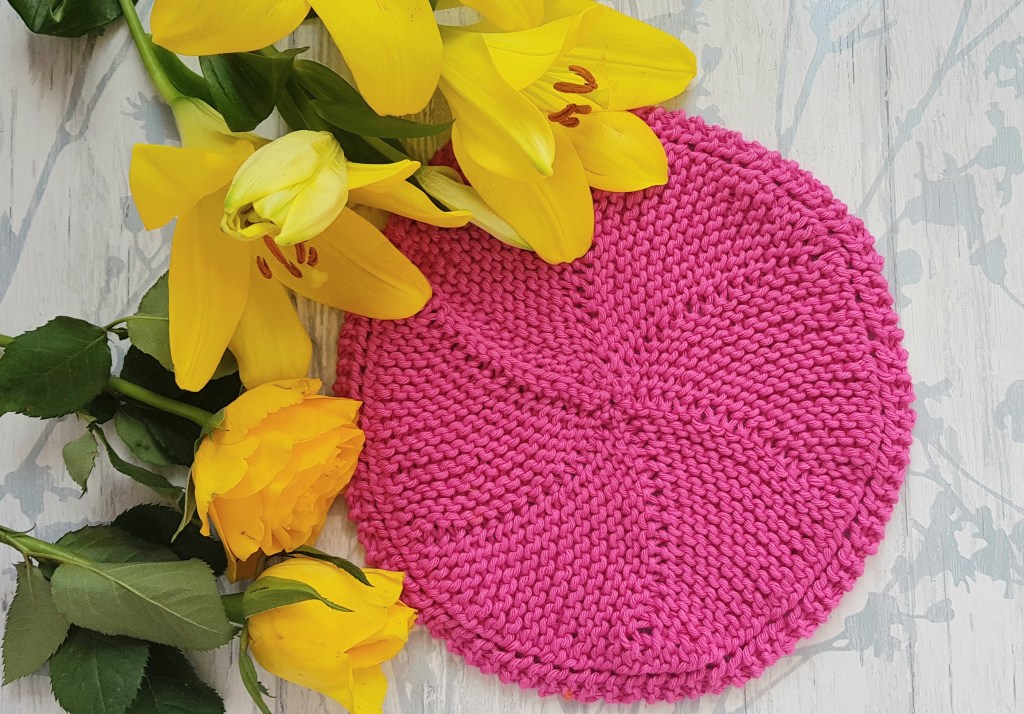
Repeat these 21 rows seven times to complete a circle.
Finish on row 21 and cast off leaving a long tail so you can sew the two sides together.
Once you know this technique you can try it with more stitches cast on to make a larger cloth, or less stitches to make it smaller.
Happy Knitting. x
Gansey Shale and Ladders
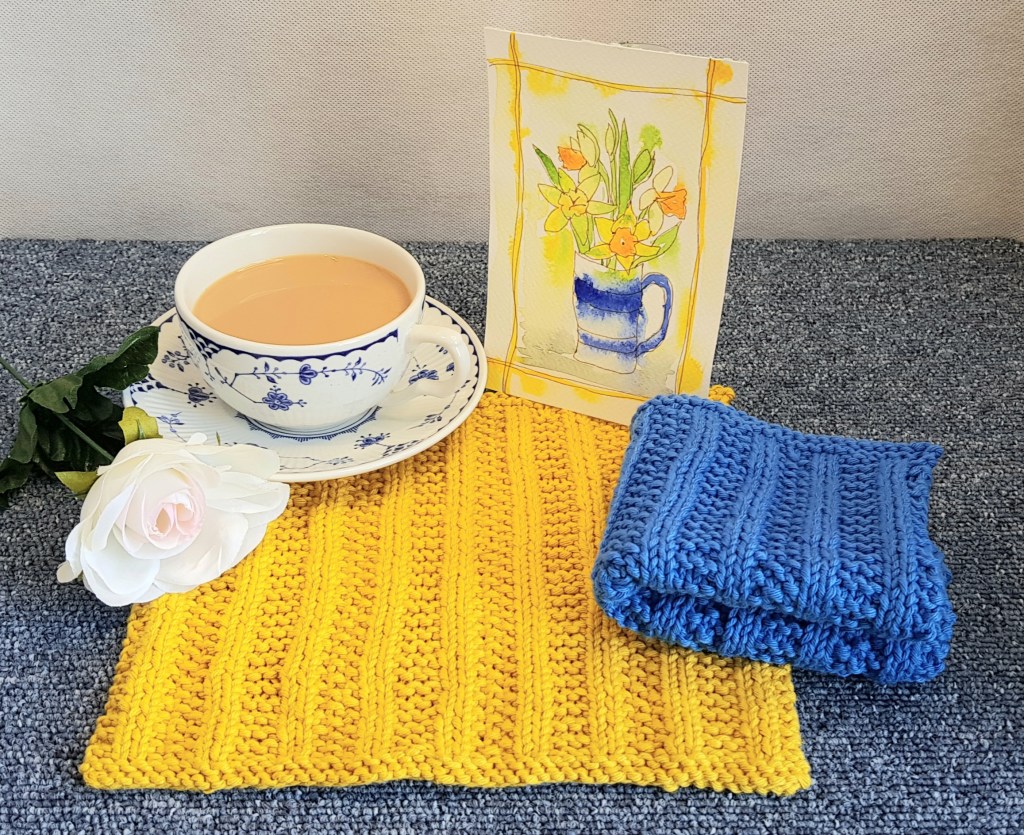
My lovely friend Judi from @blossomandleafdesign on Instagram sent me this card that she had painted. I was so inspired with the spring colours that I had a search through my cotton stash and found the perfect blue and yellow.

These dishcloths are simple to knit and give you a very pleasing pattern.
Cast on 46 stitches and knit 2 rows.
- K2 edge stitches, * K2, P3, K2, P1, K1, P1 *, K2, and K2 edge stitches
- K2 edge stitches, P3, * K1, P9 *, K1, P8, and K2 edge stitches
Repeat these 2 rows for desired length. To finish, complete row 1. then knit 2 rows and cast off.

Happy knitting x
Violet Fancy Rib
I used Lilly Sugar n' Cream but you can use any cotton you have.
My tip is to always use knitting needles slightly smaller than suggested on the ball band, this gives the dishcloth a more dense feel.
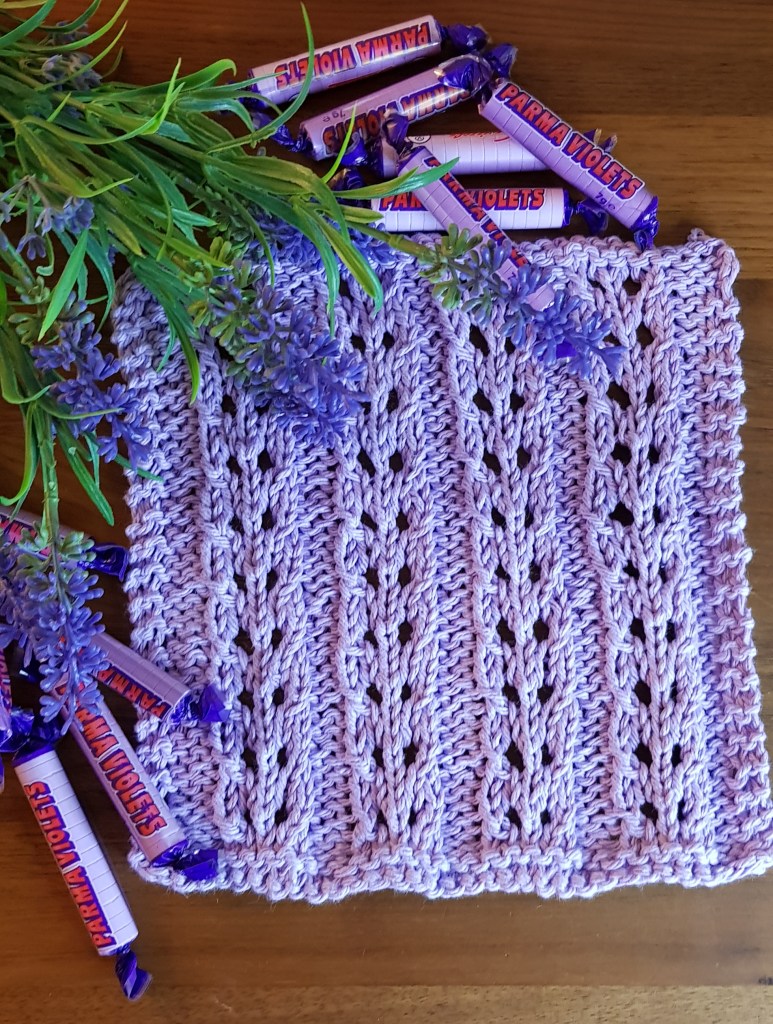
Cast on 34 stitches and knit 2 rows
Abbreviations:
yo: Yarn over
K2tog: Knit 2 together
K3e: Knit 3 edge sts
ssk: slip, slip, knit
- K3e, P2, * K5, P2 *, K3e
- K3e, K2, * P5, K2 *, K3e
- K3e, P2, * K2tog, yo, K1, yo, ssk, P2 *, K3e
- K3e, * as row 2 *, K3e
Repeat rows 1. to 4. for desired length.
to finish end on row 4. then purl one row and cast off.

Happy knitting x
Star Light
Star light,
Star bright
First Star
I see tonight
I wish I may,
I wish I might
Have the wish
I wish tonight
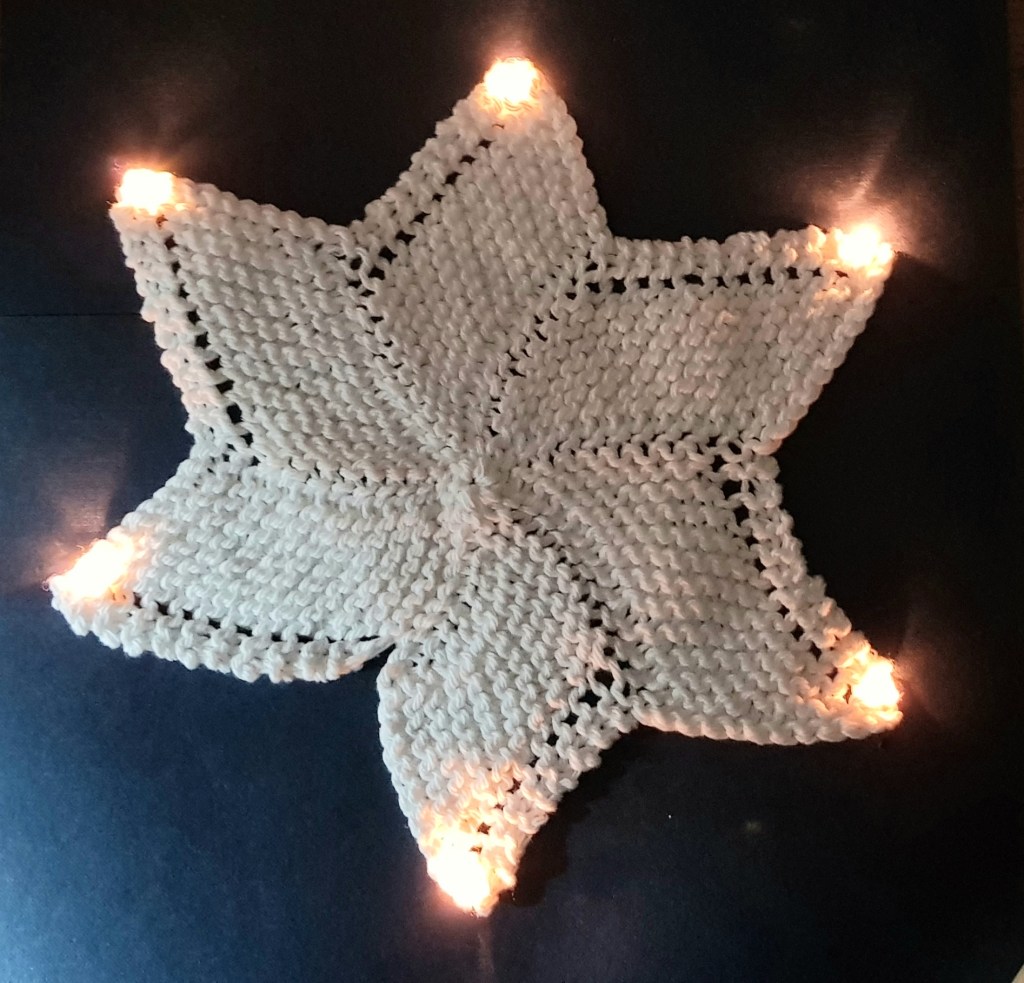
This pattern uses short rows, yarn overs (yo) and slip stitches (Slp) Slip all stitches knit wise
Using Lilly Sugar N’ Cream Or any cotton you want to use, Cast on 12 stitches
- Slp 1, knit to last 2, yo, k2, turn work
- Knit 12, leave the last stitches on the needle and turn your work
- Slp 1, knit to last 2 stitches, yo, K2
Repeat rows 2. and 3. When you create the 12th yo, K2. You will have 25 stitches on your needle. Turn your work and cast off 13 stitches and knit the remaining 11 stitches.
One Point is created.
Begin again from row 1 then repeat rows 2. and 3. Casting off after the 12th yarn over, K2. until you have 6 points in total. Then cast off completely and sew the edges together to complete your star.
Once you know the format for this pattern you will be able to create bigger and smaller stars. They are great for separating your pans or dishes to prevent them from getting scratched when stacking.
Happy knitting x
Oh Christmas Tree
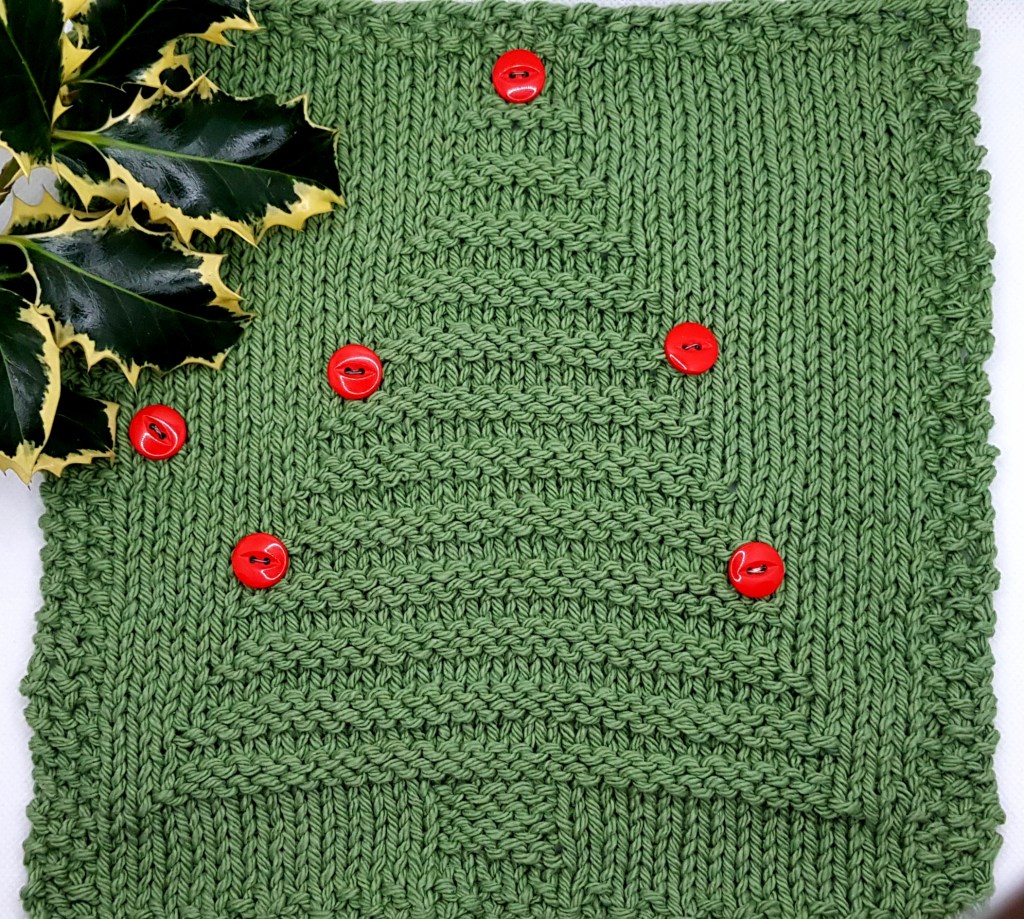
Using Lilly Sugar N’ Cream with size 4mm needles
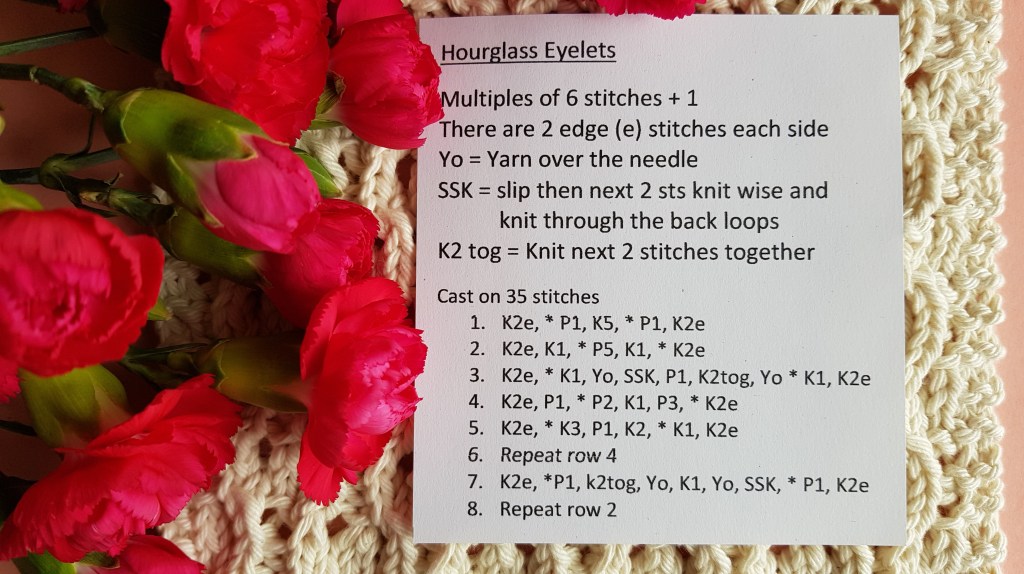
Hourglass Eyelets
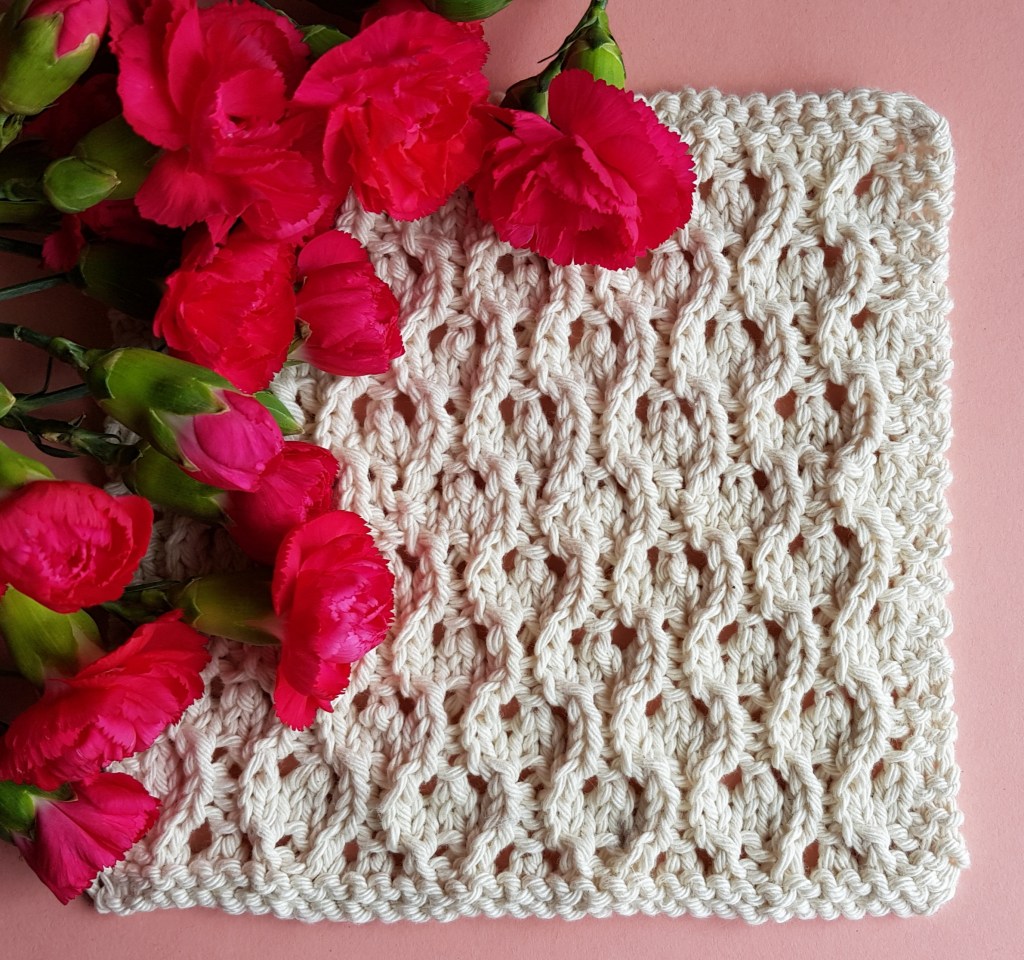
This is a pretty dishcloth
with lots of texture and an
interesting design.
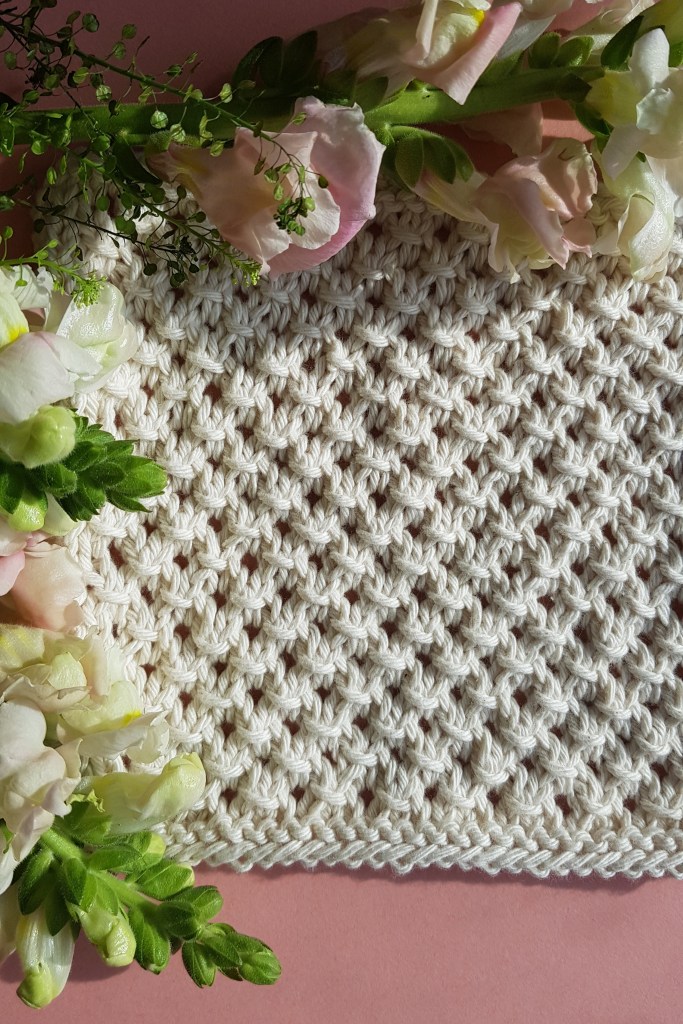
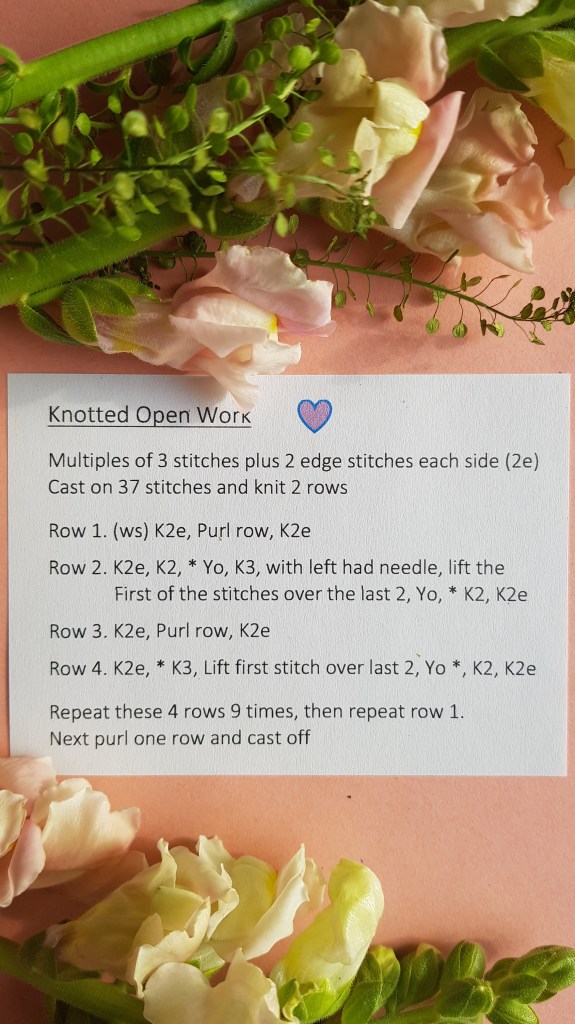
Knotted Open Work
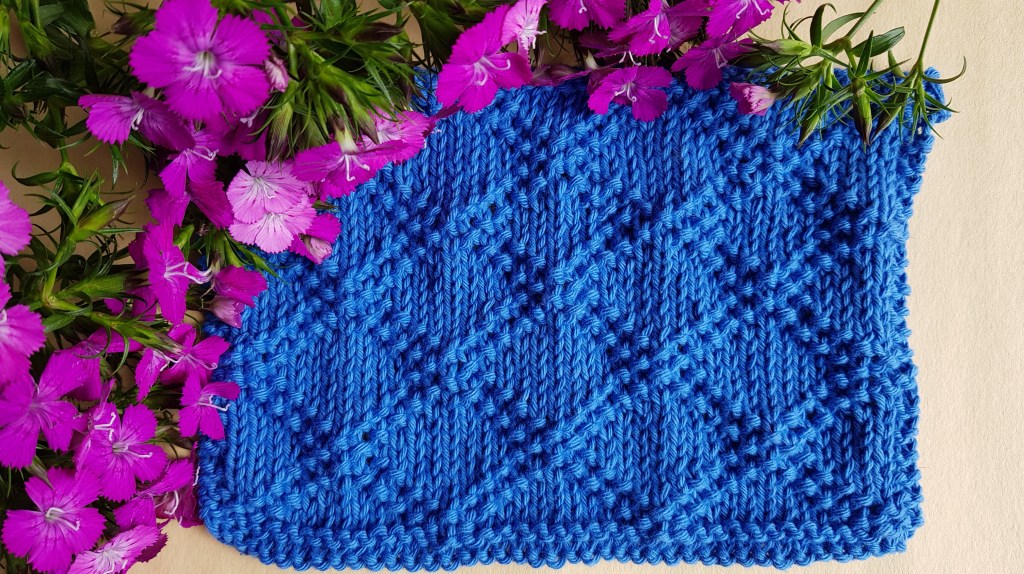
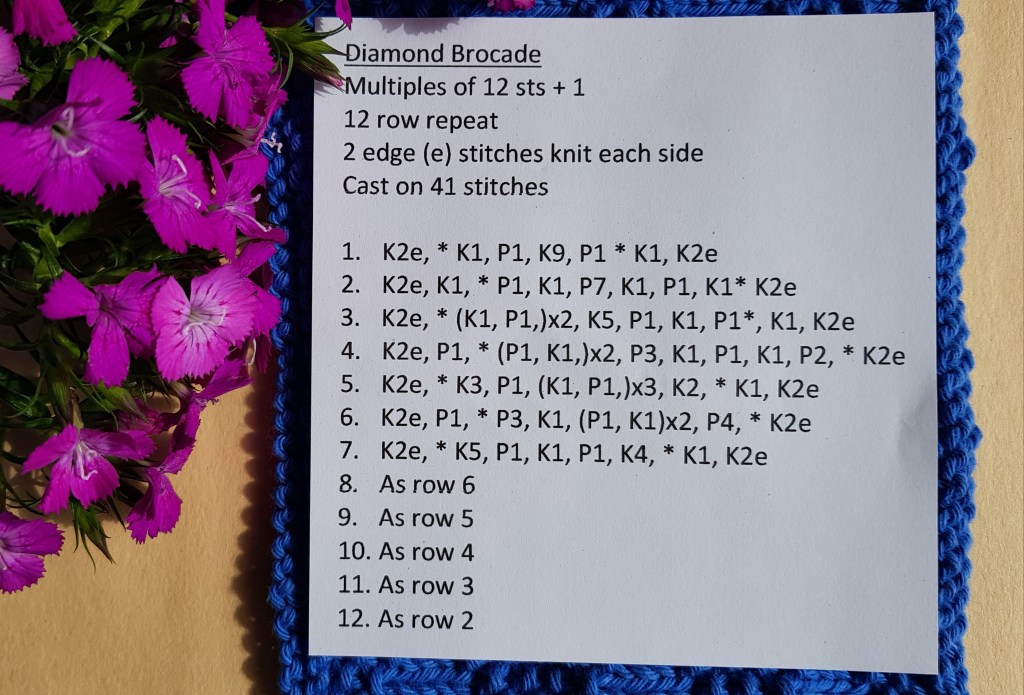
Diamond Brocade
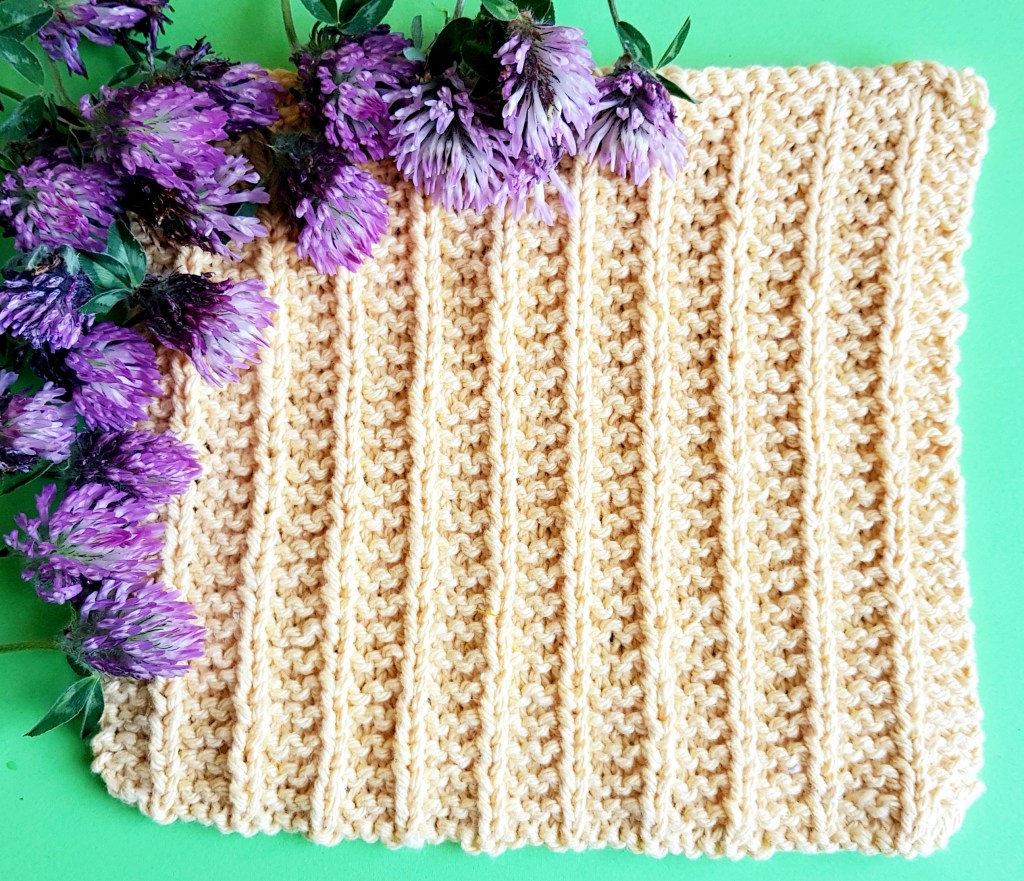
Tramlines

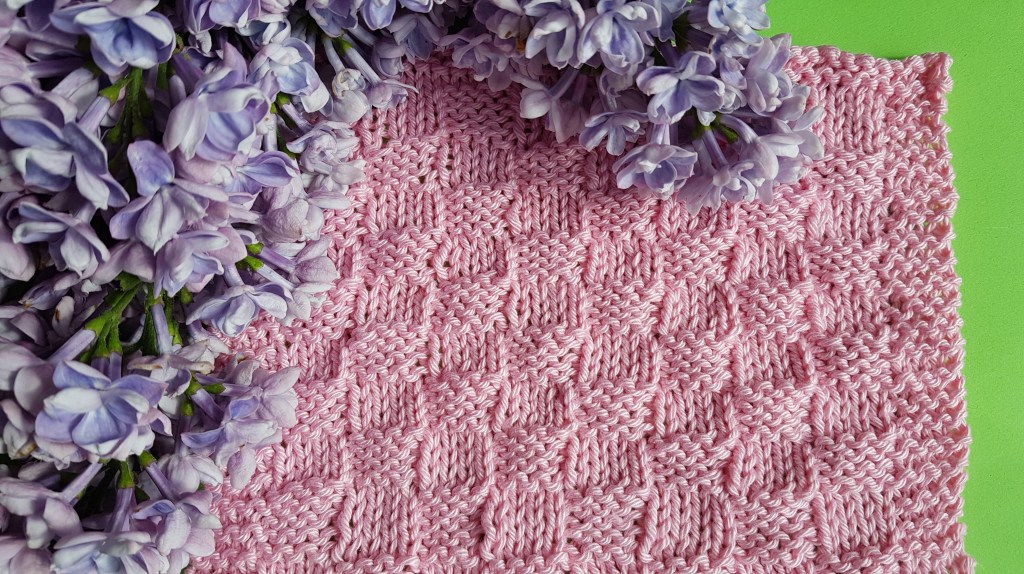
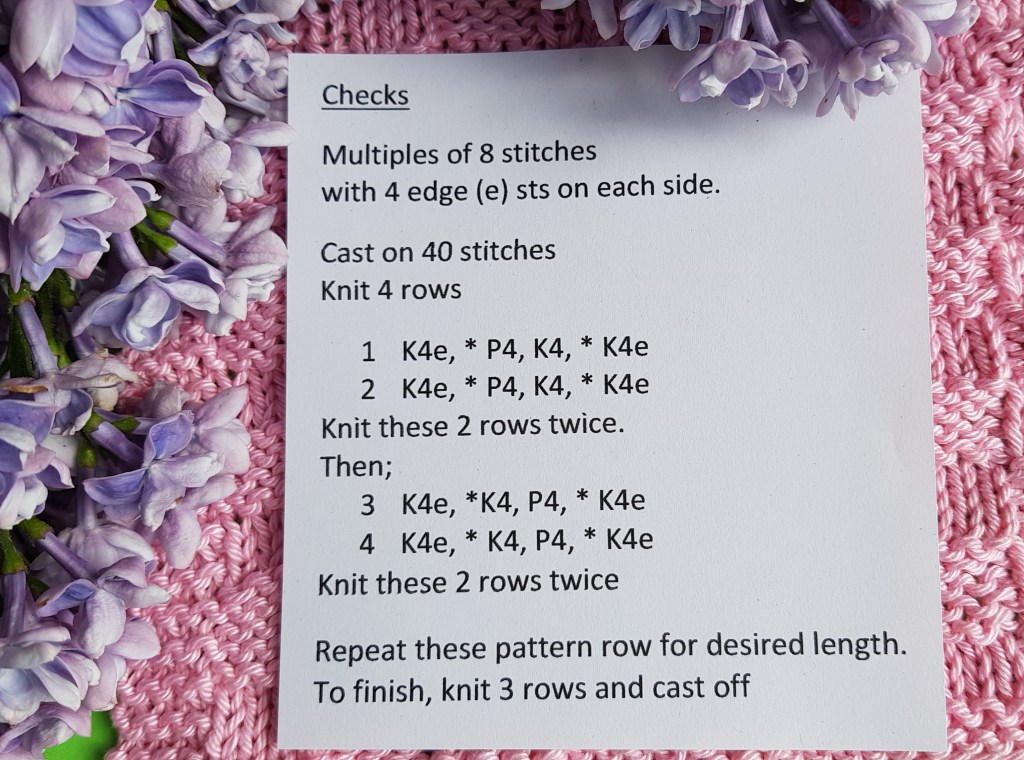
Checks
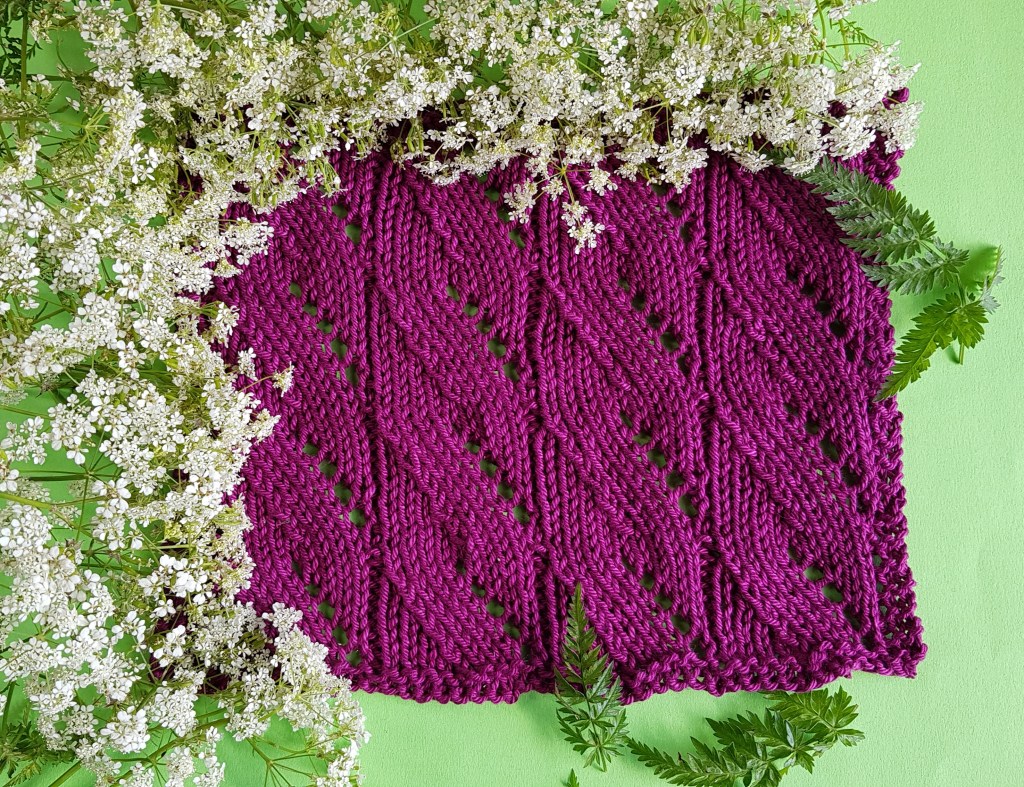
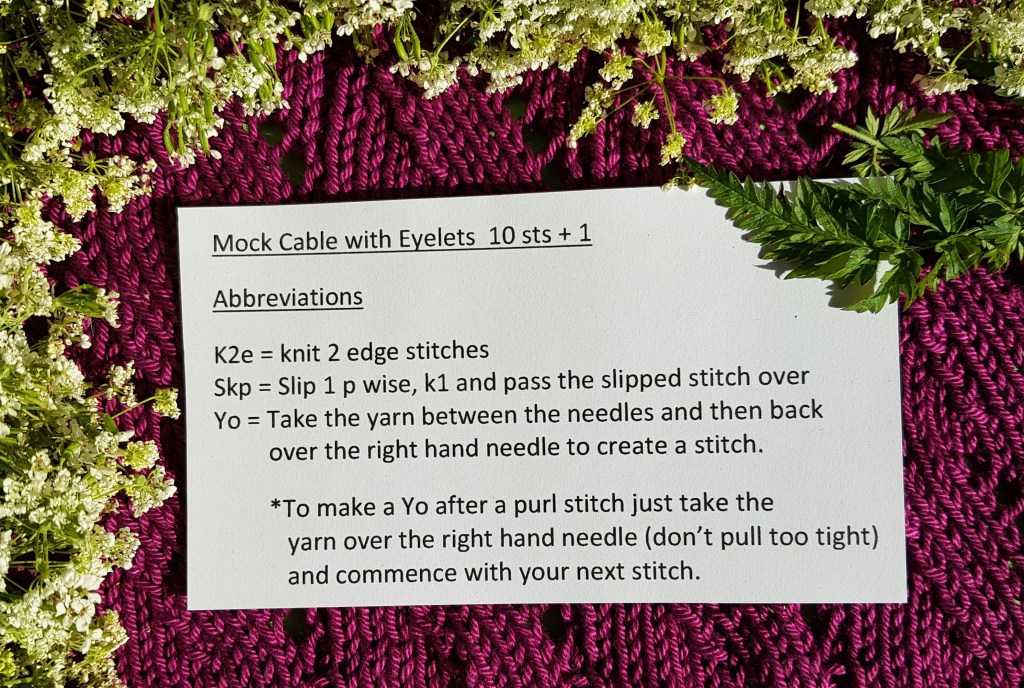
Mock cable with eyelets

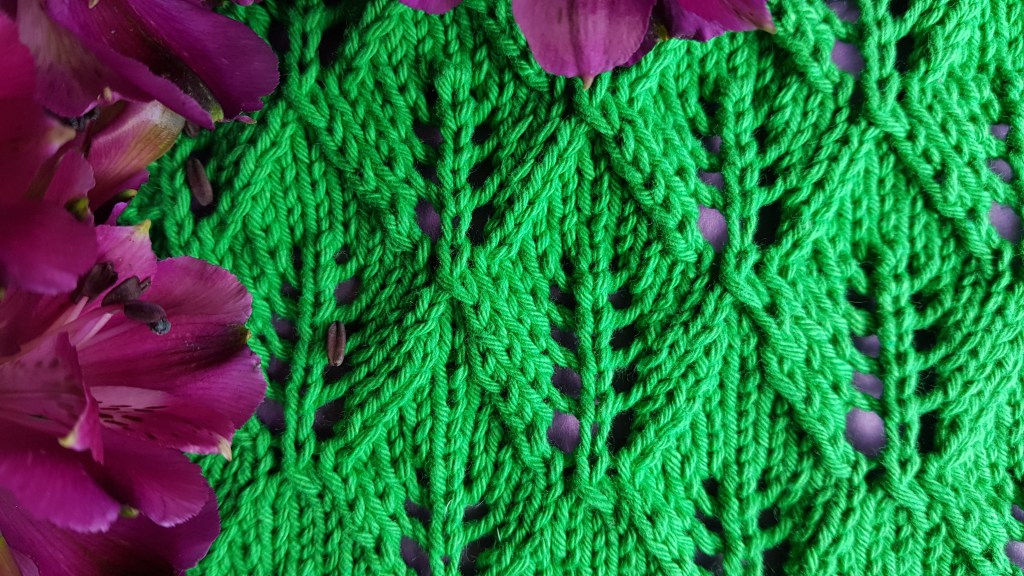
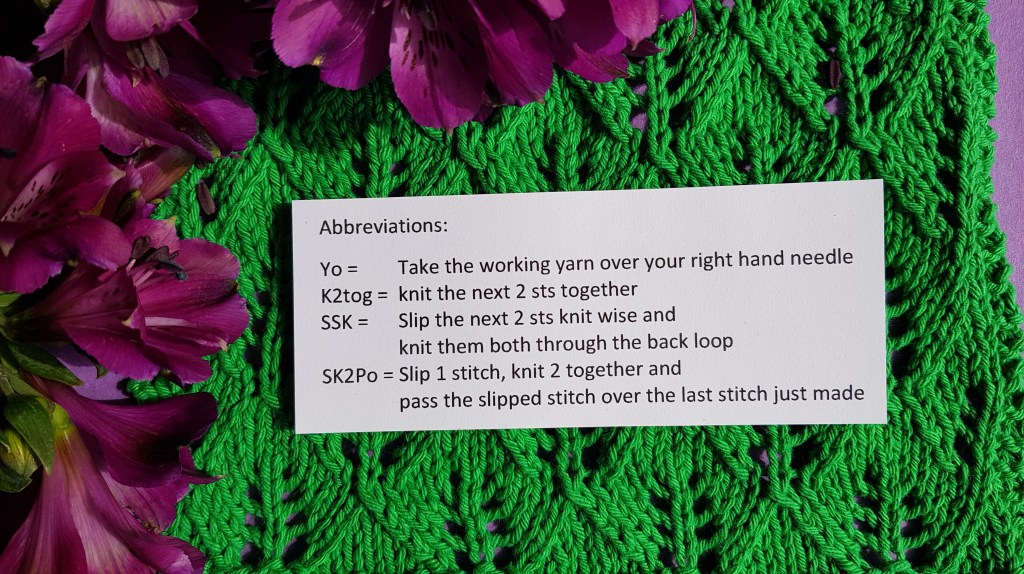
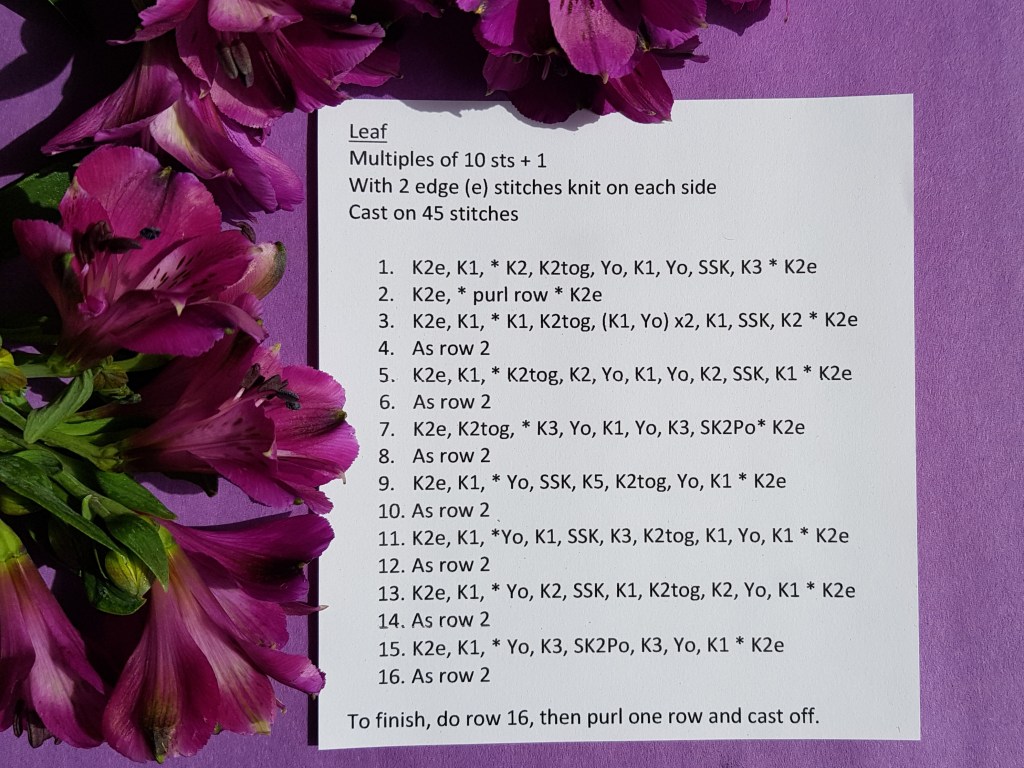
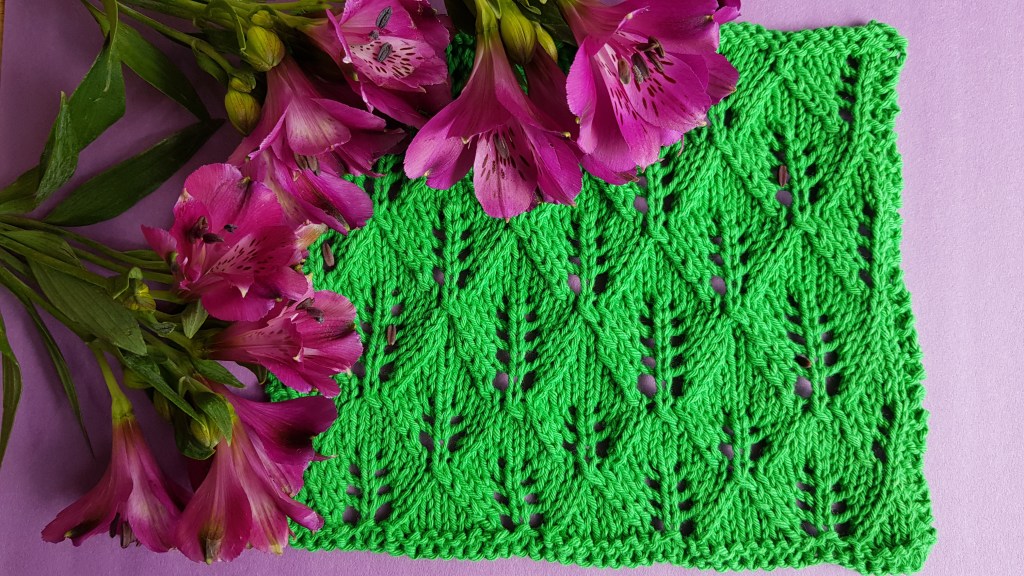
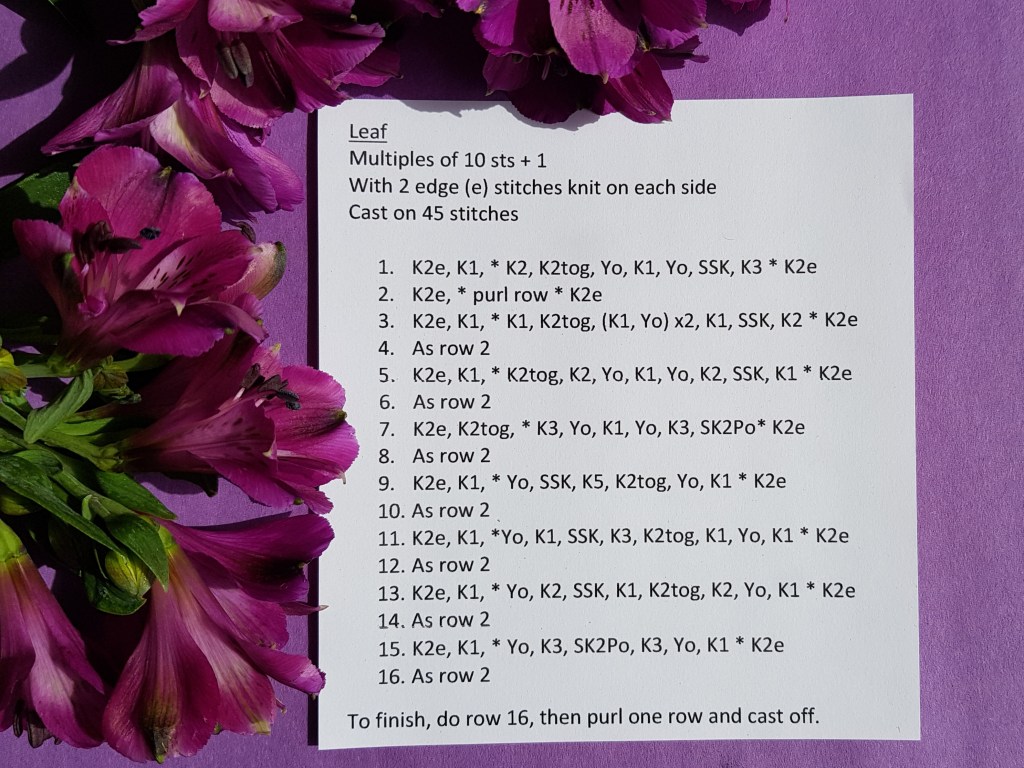
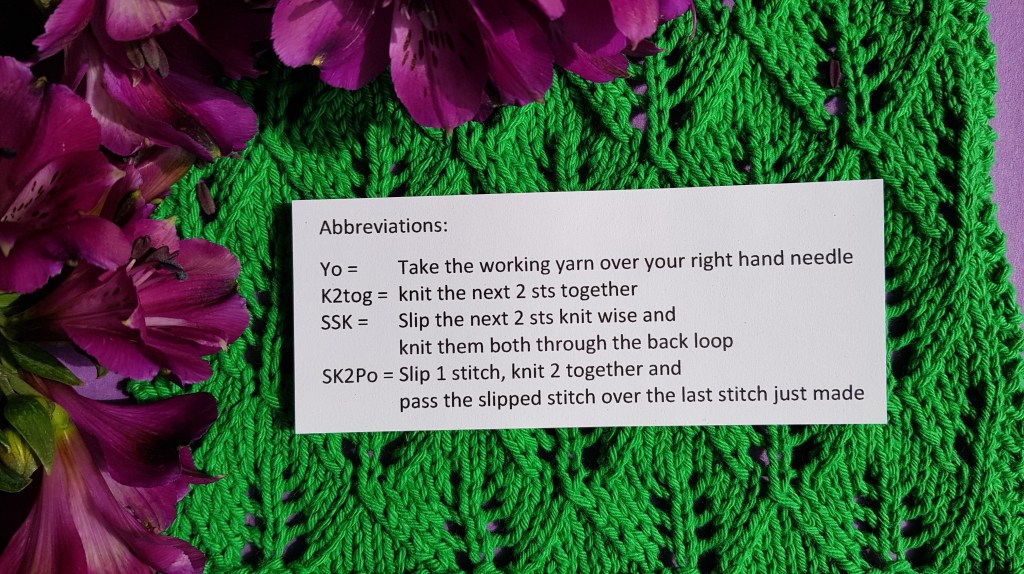
Leaf
Overlapping Waves
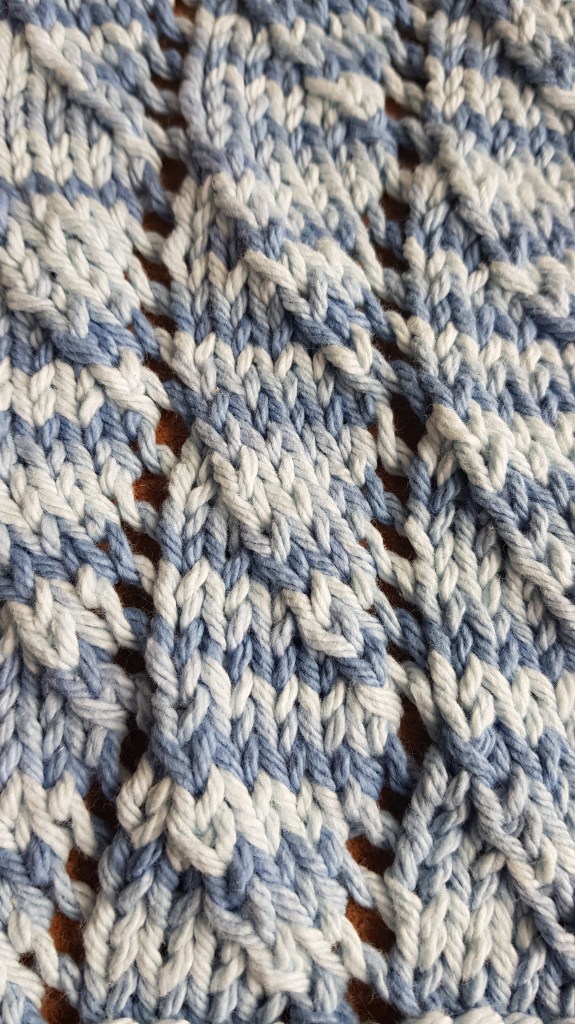
Multiples of 6 stitches plus 4.
Cast on 32 stitches and knit 2 rows
- (RS) K2, * yo, ask, K4 *, last 2 stitches yo, ssk
- Purl all stitches on all wrong side rows
- K2, * yo, K1, ssk, K3 *, last 2, yo, ssk
- As 2
- k2, * yo, K2, ssk, K2 *, last 2, yo, ssk
- As 2
- K2, * yo, K3, ssk, K1 *, last 2 yo, ssk
- As 2
- K2, * yo, K4, ssk *, last 2, yo, ssk
- As 2
Repeat these 10 rows four times.
To finish, knit 2 rows and cast off.
Happy knitting x
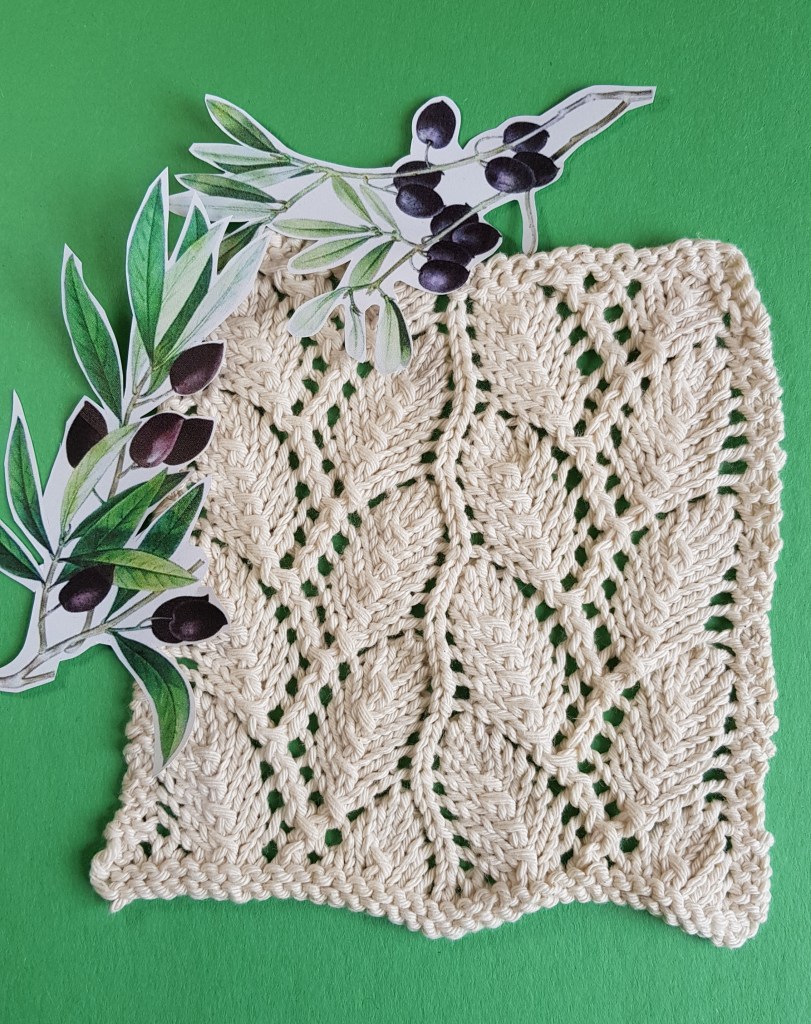
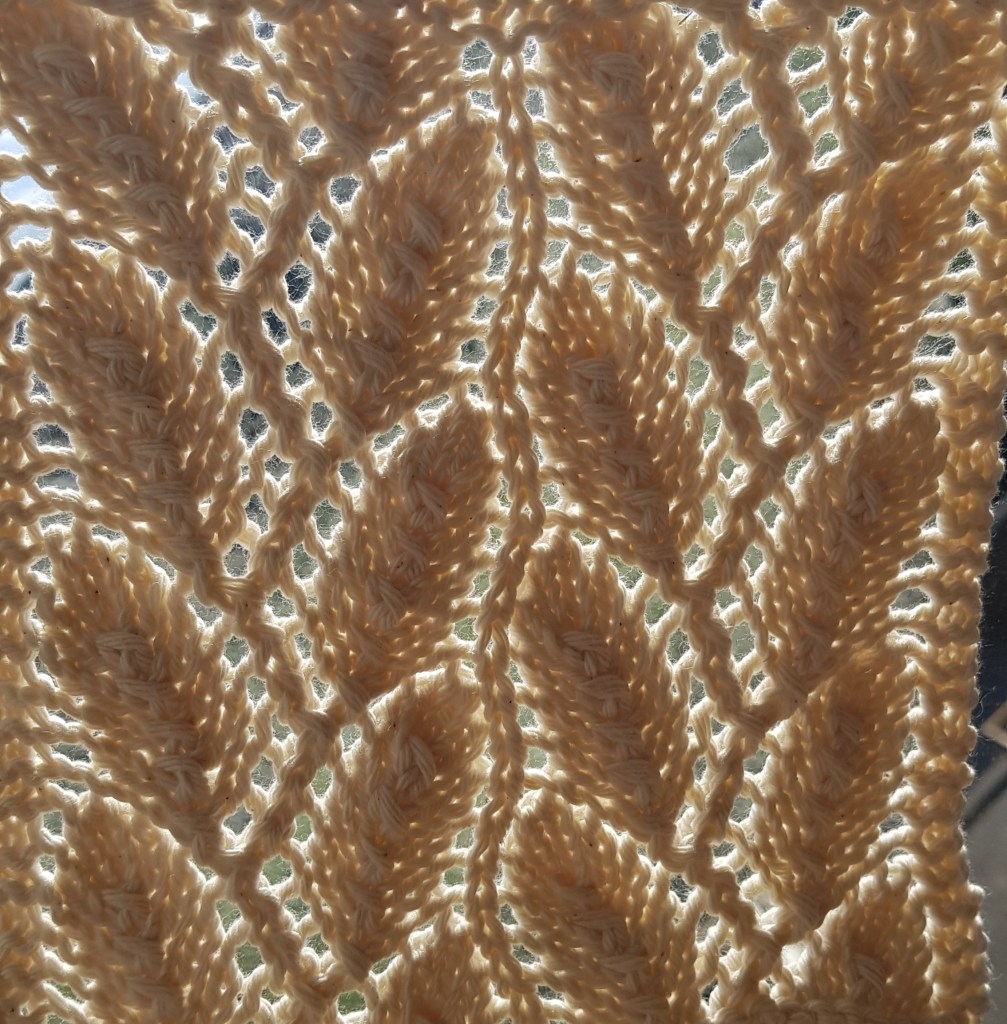
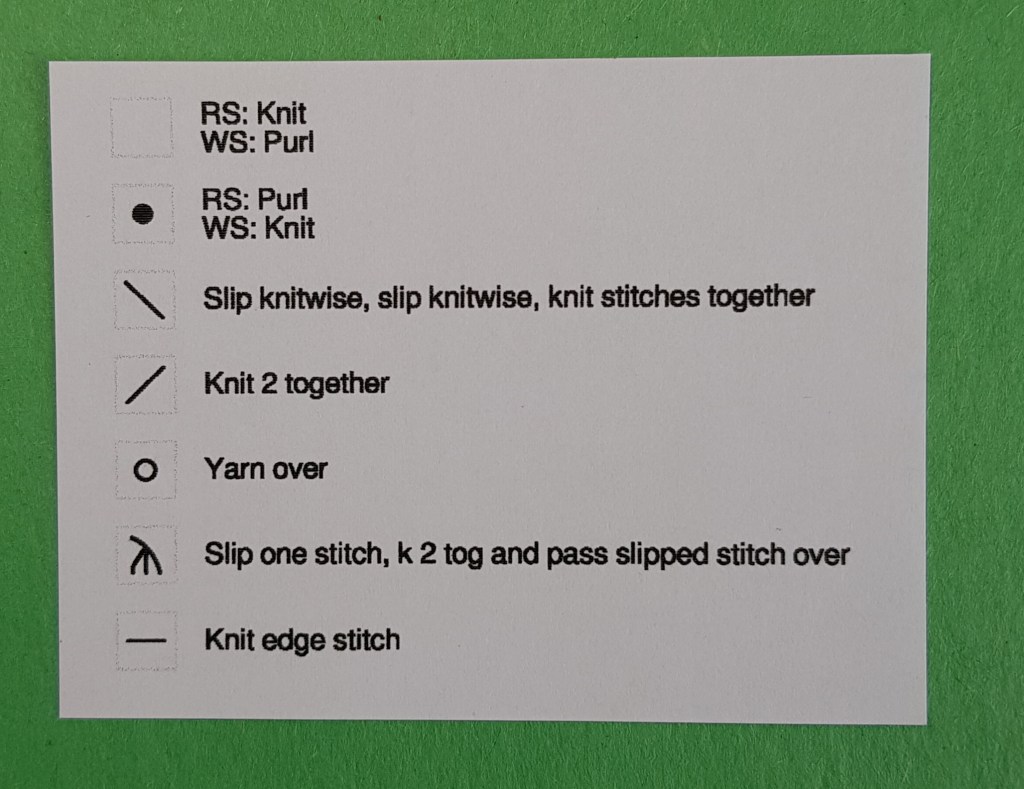
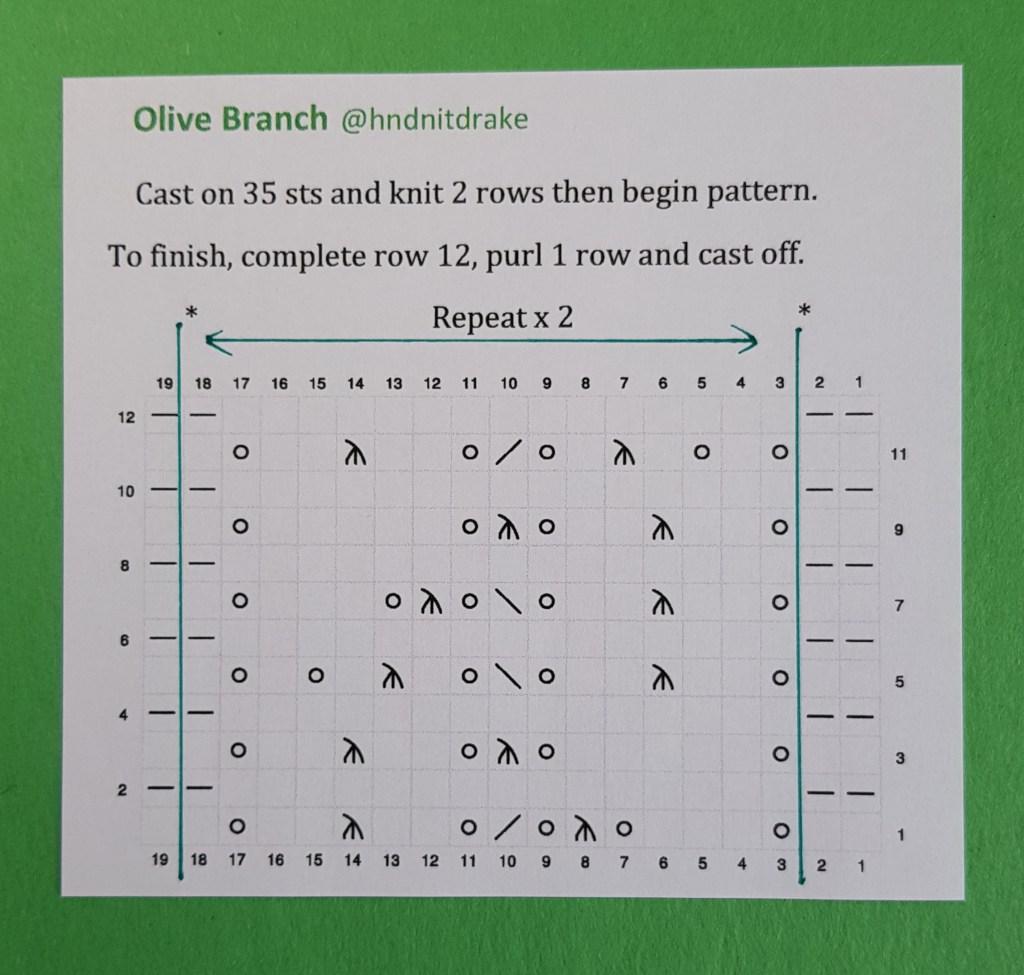
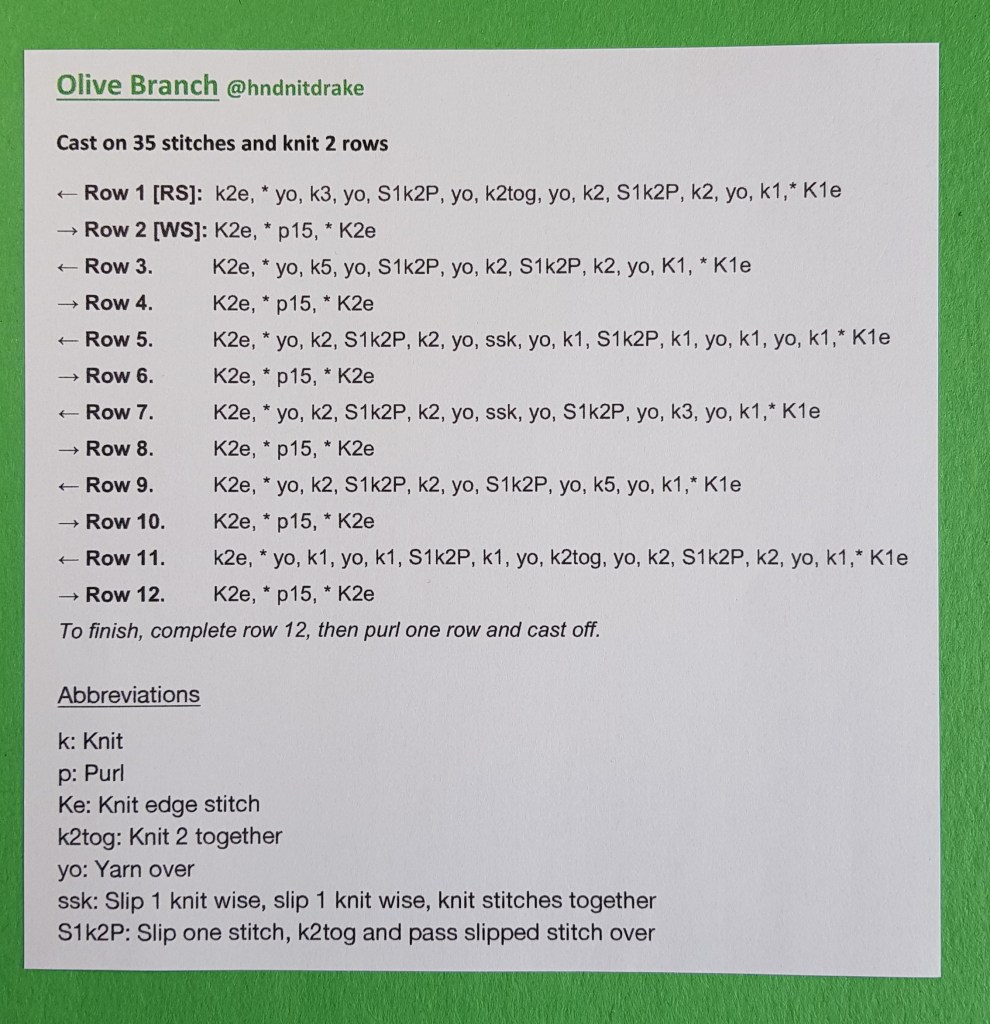
Olive Branch
 HndNit